Career & Self-Improvement
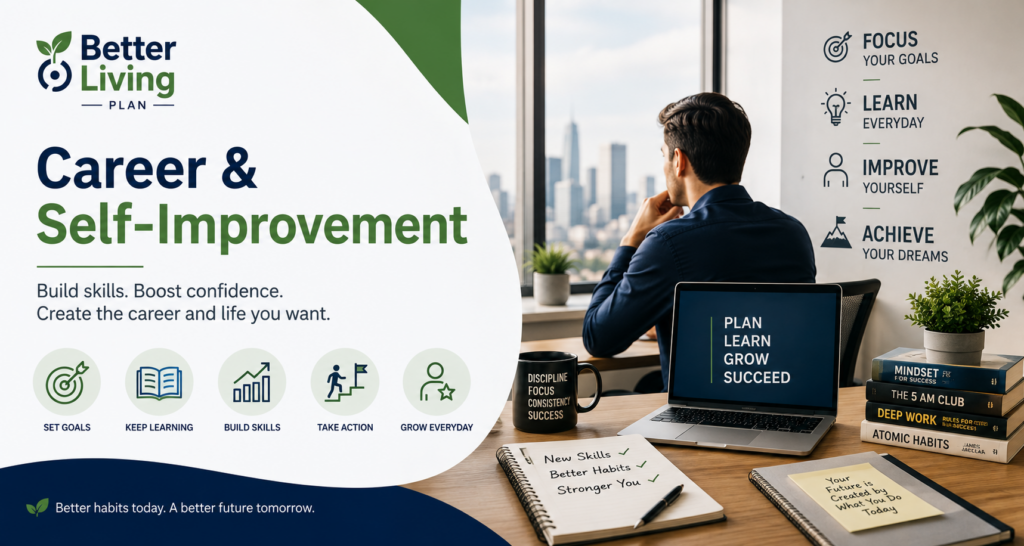
A fulfilling career is about more than earning a salary or reaching a particular job title. It is about developing your skills, building confidence, finding meaningful opportunities, maintaining a healthy relationship with work, and continuously becoming a better version of yourself. At BetterLivingPlan.com, our Career & Self-Improvement section centers on practical ideas that can help you grow professionally while also improving the way you approach everyday life.
The modern workplace is changing rapidly. Technology, artificial intelligence, remote and hybrid work, changing business models, and evolving employee expectations have transformed what it means to build a successful career. Skills that were valuable yesterday may need to be complemented by new capabilities tomorrow. Persistent learning and adaptability are therefore becoming essential for professionals at almost every stage of their careers.
Building a Successful Career
Career growth rarely happens by accident. It often stems from understanding your strengths, identifying opportunities, developing relevant skills, and taking purposeful steps toward your goals.
Whether you are starting your first job, considering a career change, looking for a promotion, or trying to become more effective in your current role, having a clear direction can make the journey easier.
A good starting point is to ask yourself a few simple questions: What are you good at? What do you enjoy doing? Which skills do you want to develop? Where do you want your career to be in the next few years? And what can you do today to move closer to that goal?
Career planning doesn’t necessarily require having a detailed 10-year plan. Instead, it can mean setting smaller milestones and consistently reviewing your progress.
Developing Skills That Matter
Skills are among the most valuable assets you can build throughout your professional life. Technical knowledge matters, but today’s workplace also appreciates communication, problem-solving, adaptability, collaboration, creativity, and critical thinking.
The rise of AI and digital technologies has made ongoing skill development even more important. Professionals can use online courses, books, podcasts, workshops, mentorship, professional communities, and practical projects to expand their knowledge.
However, learning should not become an endless collection of courses and certificates. The real value comes from applying what you learn. Taking a new skill and using it to solve a problem, improve a process, create something, or help your team can make learning far more meaningful.
Productivity Without Burnout
Being busy doesn’t always mean being productive. Many professionals spend their days responding to messages, attending meetings, switching between tasks, and dealing with constant notifications without making substantial progress on their most important work.
Effective productivity starts with identifying what actually matters.
Prioritising important tasks, establishing realistic goals, organising your schedule, minimising distractions, and creating periods of focused work can help you accomplish more without working longer hours.
Technology can also support productivity when used thoughtfully. Task-management applications, calendars, note-taking tools, AI assistants, automation platforms, and collaboration software can reduce repetitive work and improve organisation.
At the same time, productivity cannot come at the expense of health or personal life. Sustainable productivity means creating systems that allow you to perform consistently without exhausting yourself.
Developing Better Habits
Self-improvement is often associated with dramatic transformations, but significant change usually happens through small habits repeated consistently.
Reading for a few minutes every day, exercising regularly, planning the next day’s priorities, learning something new, keeping a journal, limiting unnecessary screen time, or setting aside time for reflection can gradually influence your confidence, productivity, and general well-being.
The secret is consistency, not perfection.
Instead of trying to change everything at once, choose one or two habits that can realistically fit into your existing routine. Once they become natural, you can slowly introduce additional improvements.
Communication and Confidence
Professional success isn’t based entirely on technical expertise. Communicating ideas clearly, listening effectively, handling difficult conversations, and building positive relationships can markedly affect career growth.
Confidence also develops through experience. It doesn’t mean always having the answer or never making mistakes. Genuine confidence derives from understanding your strengths, preparing well, learning from mistakes, and being willing to take on challenges.
Improving communication can begin with simple practices: listening before responding, organising one’s thoughts before important conversations, asking considered questions, and learning how to explain complicated concepts in plain language.
Leadership and Career Development
Leadership isn’t limited to people with a managerial title. Taking ownership, helping colleagues, solving problems, accepting responsibility, and contributing ideas are all examples of leadership in everyday professional life.
As careers progress, the ability to influence, mentor, collaborate, and make thoughtful decisions becomes increasingly valuable.
Developing leadership skills can involve learning how to delegate, give constructive feedback, manage disagreements, make decisions in uncertain situations, and support others. These capabilities can be useful whether you are managing a large team or merely taking responsibility for an important project.
Managing Career Changes
Career paths are rarely completely linear. People change industries, learn new skills, start businesses, move into leadership roles, return to work after a break, or discover entirely new interests.
A career change can feel uncertain, but it can also create opportunities for development and advancement. Before making a major decision, it can be useful to evaluate your transferable skills, financial situation, interests, experience, and long-term goals.
Rather than viewing previous experience as irrelevant, consider how your existing knowledge can provide an advantage in a new role or industry.
Learning From Failure
Setbacks remain an unavoidable part of professional and private growth. A missed opportunity, unsuccessful project, rejected application, difficult presentation, or career decision that didn’t work out can feel discouraging, but these experiences can also yield valuable information.
Instead of treating failure as a final judgment, consider what it can teach you.
What might have been done differently? Which skills need improvement? Was the goal realistic? Did circumstances change? What can you carry forward into the next opportunity?
This mindset turns difficulties into learning experiences and helps build resilience.
Finding Balance
Career ambition is valuable, but a successful life involves more than professional achievement. Relationships, health, hobbies, personal interests, financial well-being, travel, rest, and time away from work all contribute toward overall well-being.
A healthy approach to career development recognizes that different priorities might become important at different stages of life. There may be periods when career development takes center stage and others when family, health, learning, or personal interests require more attention.
Finding balance doesn’t mean dividing every day equally between work and private life. It means making deliberate choices about where your time and energy should go.
Our Approach to Career & Self-Improvement
At BetterLivingPlan.com, we believe self-improvement should be practical, realistic, and sustainable. You don’t need to completely reinvent yourself to make progress.
Our Career & Self-Improvement content explores productivity, career planning, workplace skills, personal development, learning strategies, confidence, leadership, habits, motivation, and the changing world of work.
The goal is to provide ideas that you can understand quickly and apply in real life.
Your career is a journey instead instead of a destination, and self-improvement is an ongoing process. The most important step doesn’t have to be a major one. It can simply be learning something new, improving one habit, having a difficult conversation, setting a meaningful goal, or taking the first step toward an opportunity.
Study continuously. Work intelligently. Build better habits. Keep moving forward.
That’s the Better Living approach to career and self-improvement.